
Working with ecommerce brands on Google Ads, I often see this: ROAS looks great, but the business is still unprofitable on every sale. Today, I'll show you exactly why your 4x ROAS might be costing you money, and what you should be measuring instead to ensure your marketing actually drives profit.
ROAS only tells half the story. A 4x ROAS means you spent $1 and generated $4 in revenue. But revenue isn't profit.
Here's a real example that illustrates the problem. Say you're selling two gym products:
Both campaigns are hitting 4x ROAS. You think they're equally successful. But when you look at actual profit, the picture is completely different.
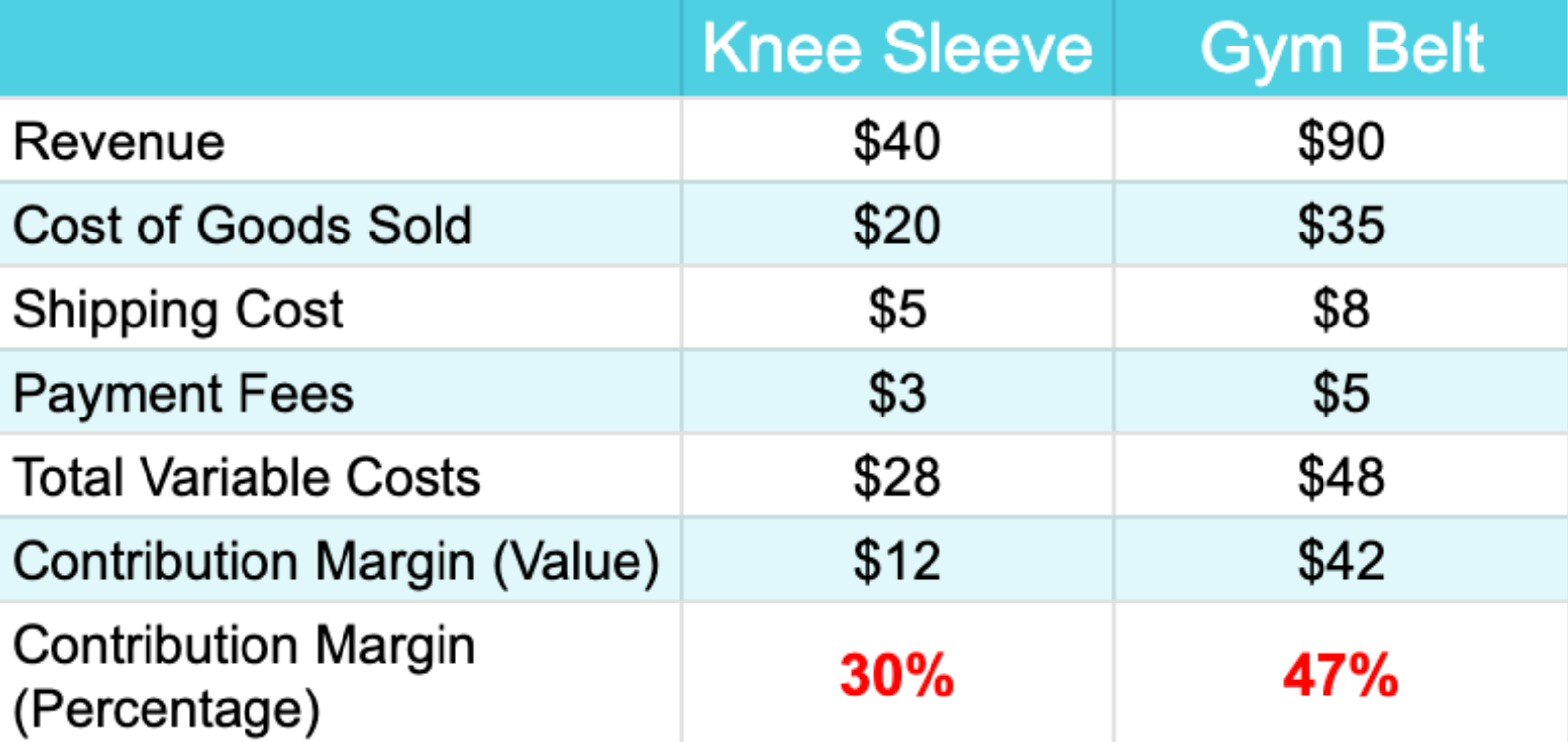
Same ROAS. Completely different profit impact. This is why some businesses celebrate ROAS wins while going broke.
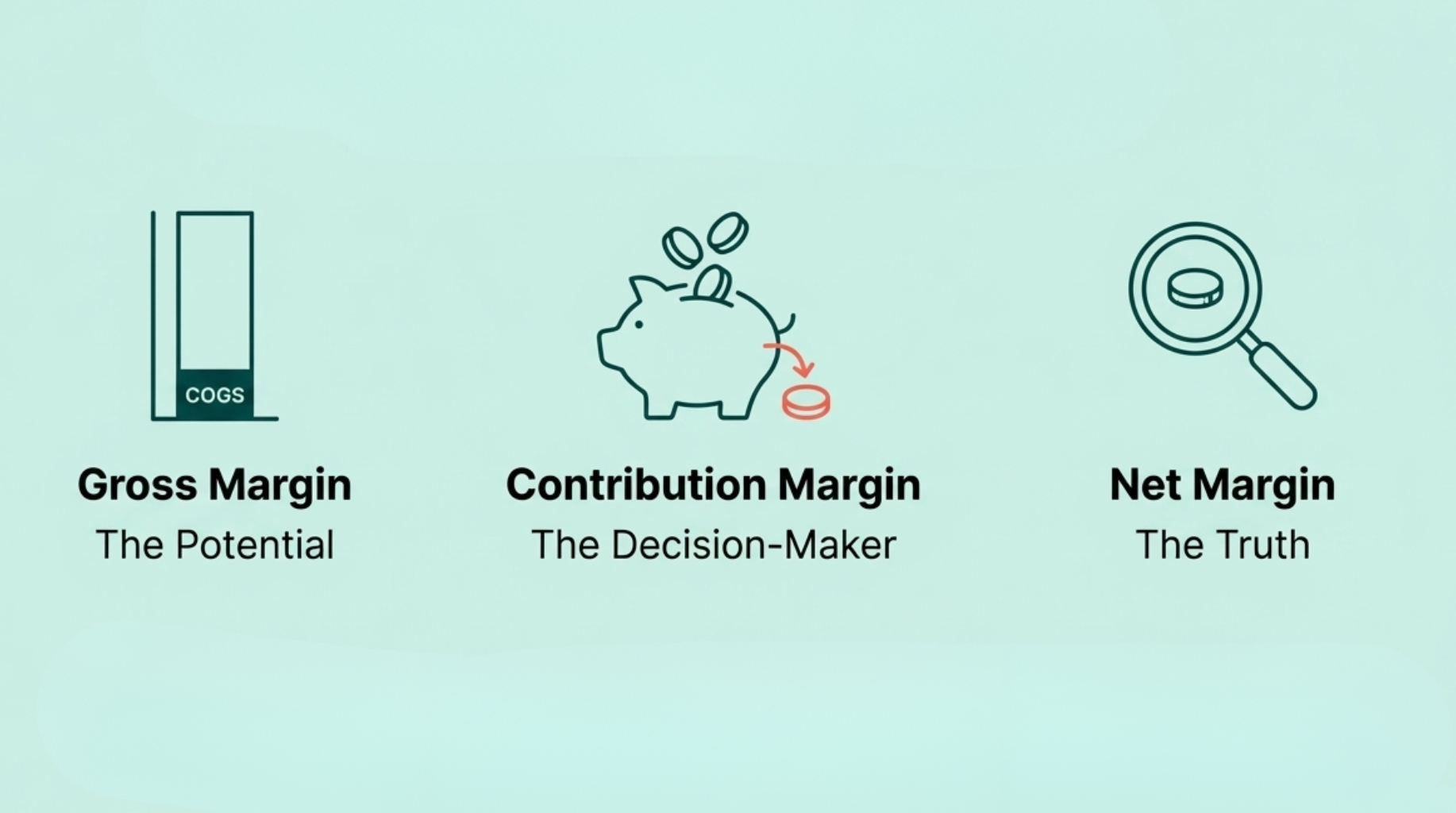
Every profitable business owner thinks in three types of margins.
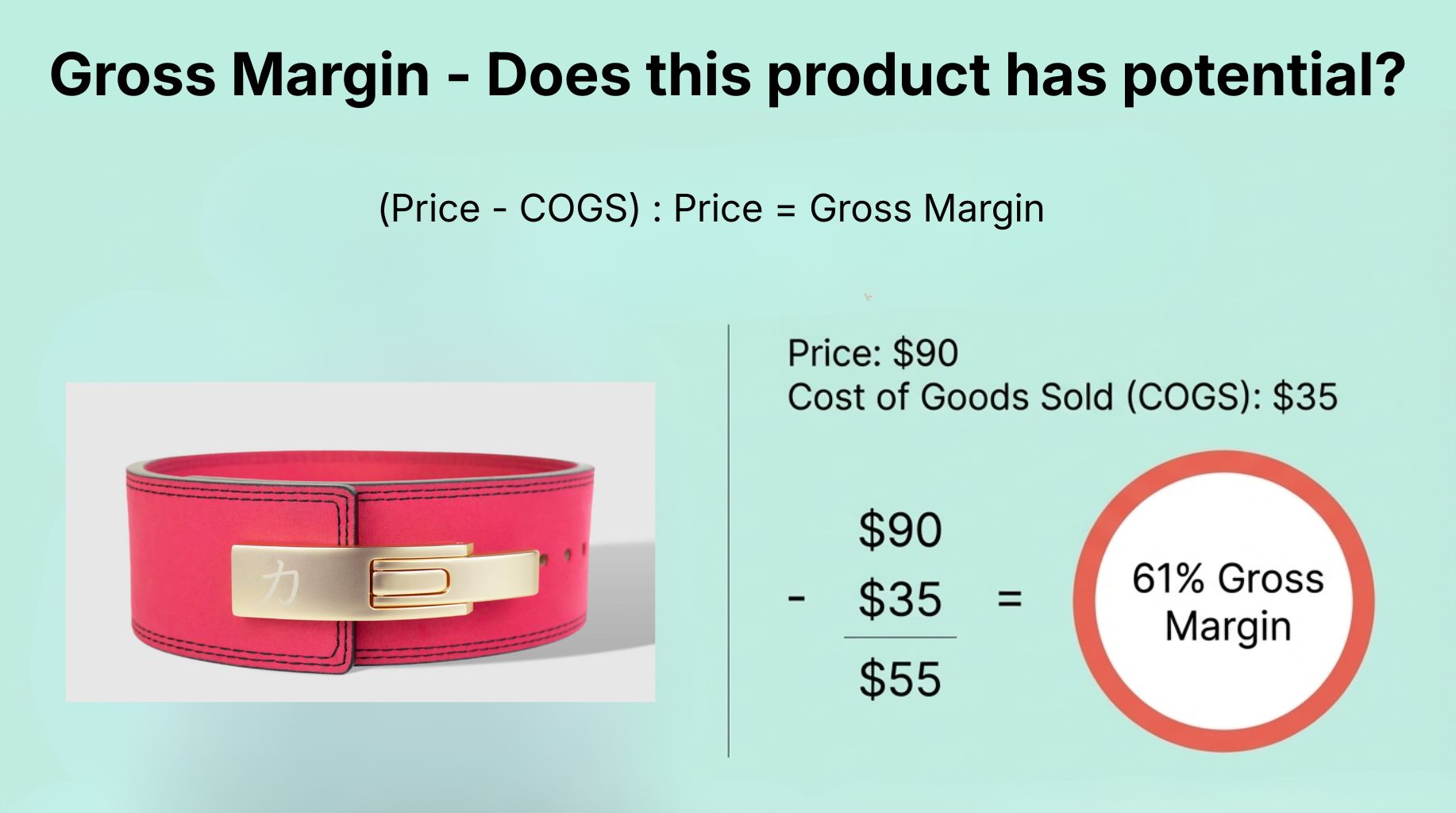
This is your starting point. Using the gym belt as an example:
Formula: (Revenue - Cost of Goods Sold) ÷ Revenue
Gym Belt Calculation:
This tells you the product has potential, but it's not the full picture.
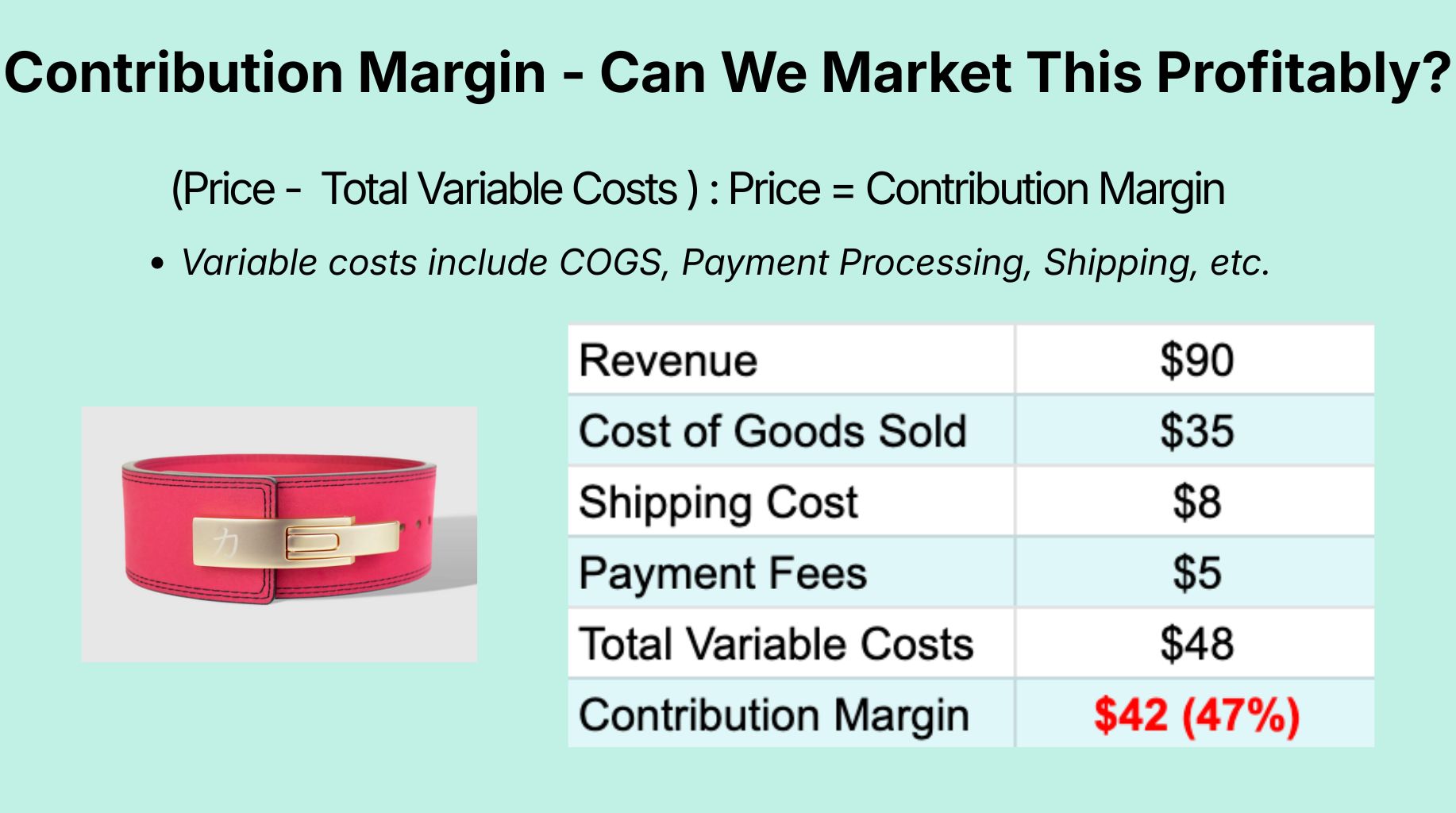
This is the money left after all variable costs—the cash available for marketing and overhead. This is the number that should drive your marketing decisions.
Formula: Revenue - All Variable Costs
Knee Sleeves:
Gym Belt:
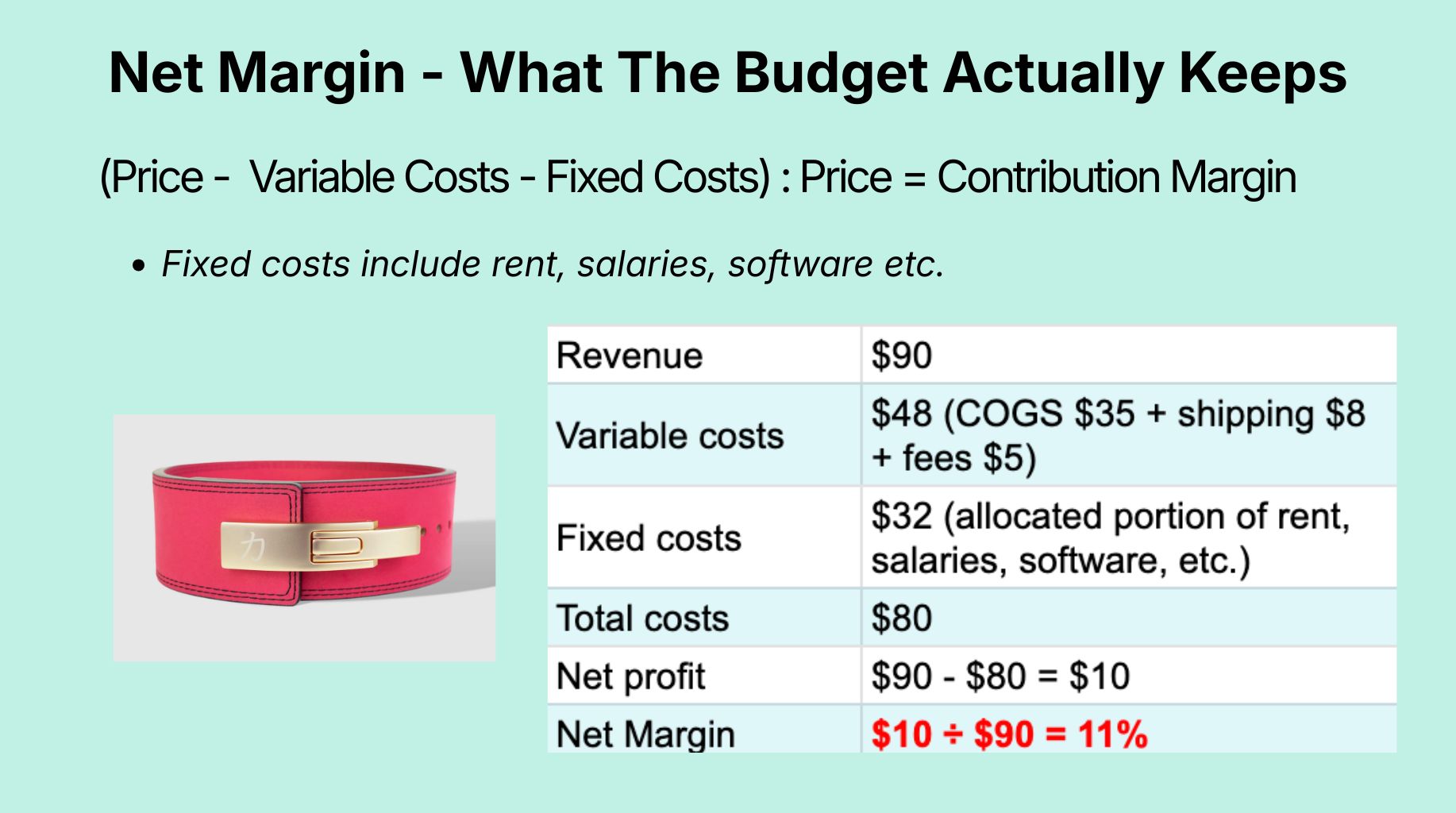
This is what's left after ALL expenses—including salaries, rent, software, everything.
Formula: (Revenue - All Costs) ÷ Revenue
Gym Belt Complete Breakdown:
As a business owner, this final number determines if your business survives and grows. It's the real impact of your marketing.
Those contribution margins completely change how you should run your campaigns.
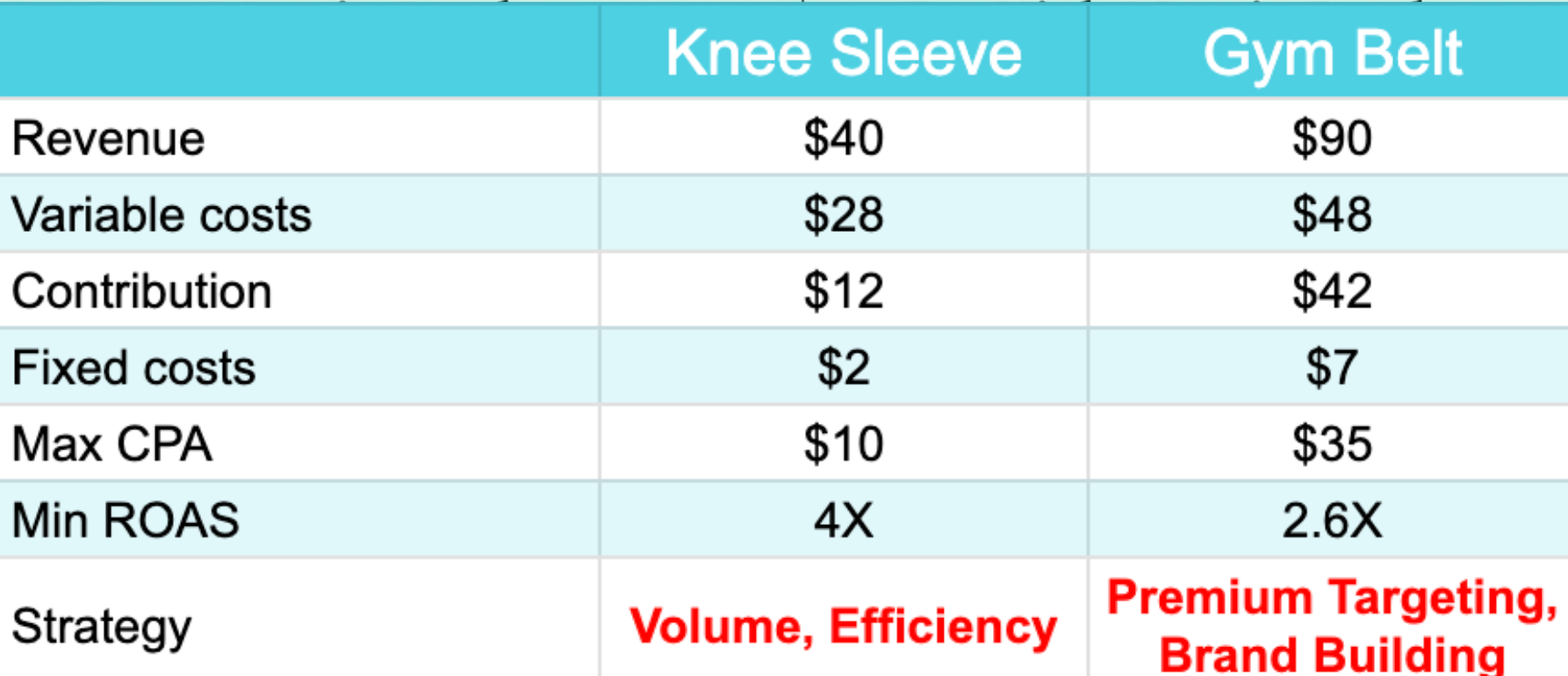
Here's where it gets interesting. Those contribution margins completely change how you should run your campaigns.
For the knee sleeves with only $12 contribution margin:
For the gym belt with $42 contribution margin:
Same ROAS target for both products would be a massive mistake. You'd be leaving money on the table with the gym belt, or burning cash on the knee sleeves.
This is why smart business owners don't get excited by ROAS alone. They want to see profit-driven marketing decisions, not revenue vanity metrics.
Whether you're reporting to a business owner or you ARE the business owner, here's how profit-focused thinking sounds:
Instead of: "We achieved 4x ROAS!"
Say: "This campaign generated profitable sales with positive contribution margin."
Instead of: "Our CPA increased by 20%!"
Say: "Our cost per acquisition is still 40% below our maximum profitable CPA based on contribution margin."
Example of profit-focused reporting:
"Our gym belt campaign generated $42 in contribution margin per sale (revenue $90 minus variable costs $48) with a $25 CPA, delivering 68% margin efficiency ($42 - $25 = $17 profit per sale)."
"We reallocated budget from knee sleeves to gym belts, increasing overall campaign contribution margin by 35%."
This is the language of sustainable, profitable marketing.
Here's how to implement this immediately:
Step 1: Audit your product portfolio Calculate contribution margins for your top 10 products. You'll be shocked at the differences.
Step 2: Restructure your campaigns Separate high-margin from low-margin products. They need completely different strategies.
Step 3: Reset your KPIs Start tracking contribution margin per campaign, not just ROAS. Your media buyers should be optimizing for profit, not revenue.
Step 4: Educate your team Train everyone on margin-based optimization. It's a completely different mindset.
The result: You'll make smarter budget decisions, ensure every marketing dollar drives actual profit, and build a truly sustainable business.
Calculating these margins manually is time-consuming and error-prone. For Shopify stores, the LiveTimely app automates all these calculations, gives you real-time margin data, and integrates directly with your store analytics.
Q: Why is a high ROAS not always good?A: ROAS measures revenue generated per dollar spent, but revenue isn't profit. A product with 4x ROAS but low margins might be unprofitable after accounting for COGS, shipping, fees, and fixed costs. Two products with identical ROAS can have completely different profit impacts.
Q: What's the difference between gross margin and contribution margin?A: Gross margin only subtracts cost of goods sold from revenue. Contribution margin subtracts ALL variable costs—including shipping, payment processing fees, and any per-unit costs. Contribution margin gives you the actual cash available for marketing and overhead.
Q: How do I calculate my maximum profitable CPA?A: Take your contribution margin per sale, subtract your allocated fixed costs per unit, and what remains is your maximum CPA. For example, if your contribution margin is $42 and fixed costs are $10 per unit, your maximum CPA is $32.
Q: Should I stop advertising low-margin products?A: Not necessarily. Low-margin products may still be profitable with efficient, volume-focused strategies. The key is setting appropriate ROAS targets based on their actual margins rather than applying the same target across all products.
Revenue impresses marketers. Margins build sustainable businesses. Master both, and you'll never waste another marketing dollar.
Your next steps:
.png)
.png)


.png)