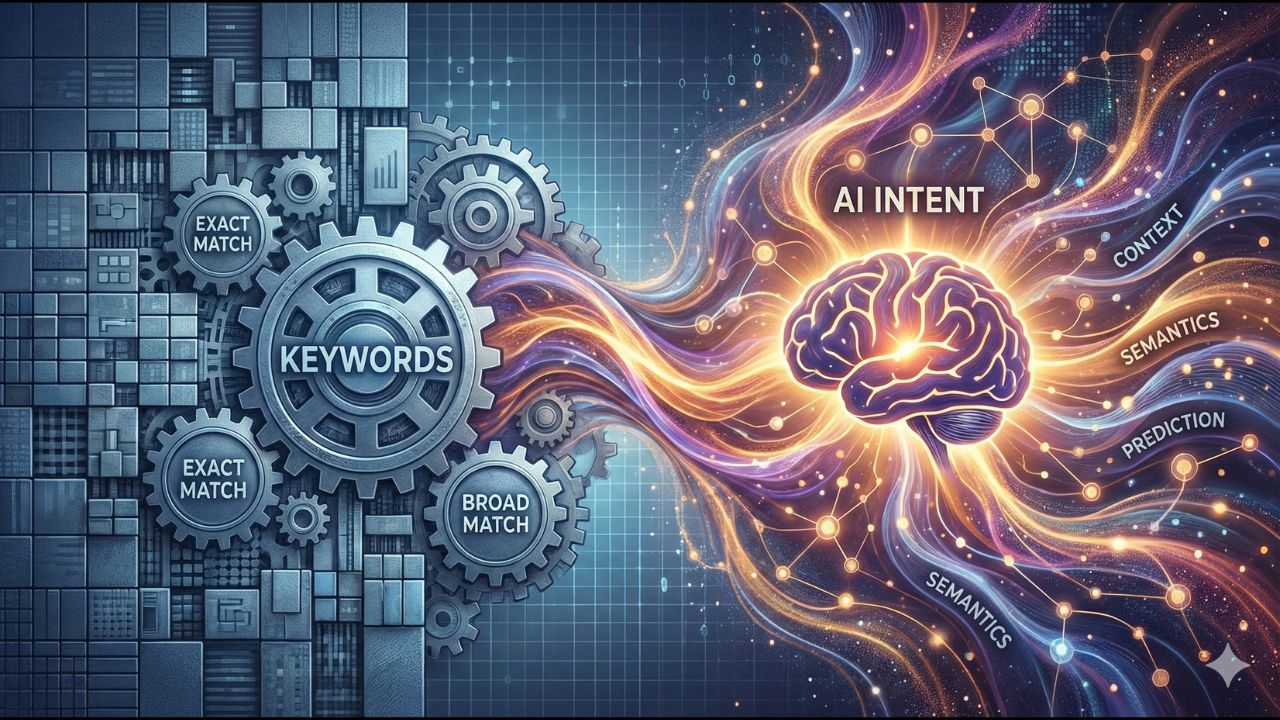
Google AI

AI's Changes to Google Ads: What E-commerce Brands Need to Know

Andrey Kisselev
Andrey Kisselev
Edited on: 
December 10, 2025
AI didn't kill Google—$50B proves it. But Google Ads is changing. Here's what e-commerce brands need to know.

Go Beyond the Article

Why The Video is Better

  • You'll see real client account examples
  • I can explain things that don’t translate well to text
  • You’ll learn advanced tactics for trickier situations

If you've been anywhere near the tech news, the headlines are pretty dramatic. For the past couple of years, the story has been all about this "code Red Panic" inside Google.
The popular idea is that these powerful new AI tools have landed a knockout blow, and then it's just a matter of time before the whole search Empire crumbles. Here's where things get really interesting. When you stop reading the headlines and start looking at the actual numbers, a completely different picture starts to take shape. Let's do a quick reality check.

The Data-Counter Story

We're going to start with the hard data because it tells a pretty powerful counter story to that whole "Google is cooked" narrative.

First off, let's just follow the money. In the last few quarters, Google's search revenue hasn't just been stable. It's been seeing double digit year over year growth - growing by over 10% when your starting point is more than $50 billion.

That's just massive for a company that's supposedly on the ropes. Financially, they look surprisingly strong. Now take a look at the sheer scale of it all. Google is handling something like 5 trillion searches a year. OpenAI is getting close to 1 trillion, which is insanely impressive, but that still means Google is operating at five times the volume.

This isn't exactly a battle of equals - at least not yet.
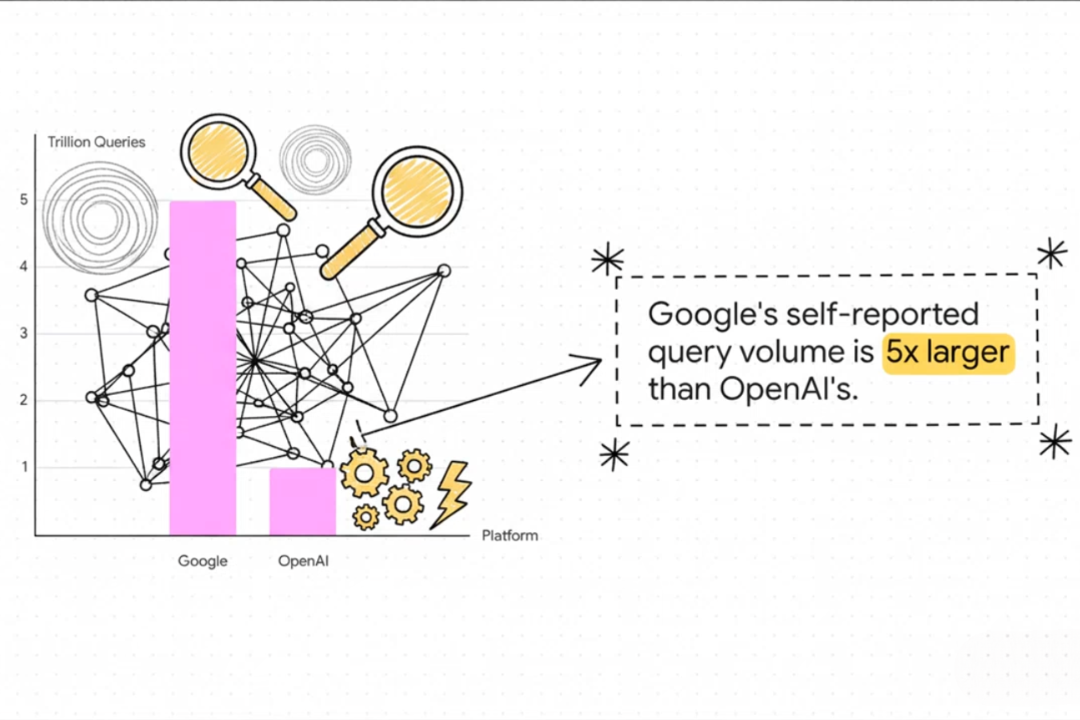
Google's self-reported query volume is 5x larger than OpenAI's

Here's the most important data point: It's not just about how many queries, but what kind of queries. Only about 20% of ChatGPT prompts are for information seeking - the classic stuff you'd Google. And when it comes to actually shopping for products, it's a tiny 2%.

It really seems like people are using both tools for different things. It's not an either-or situation.
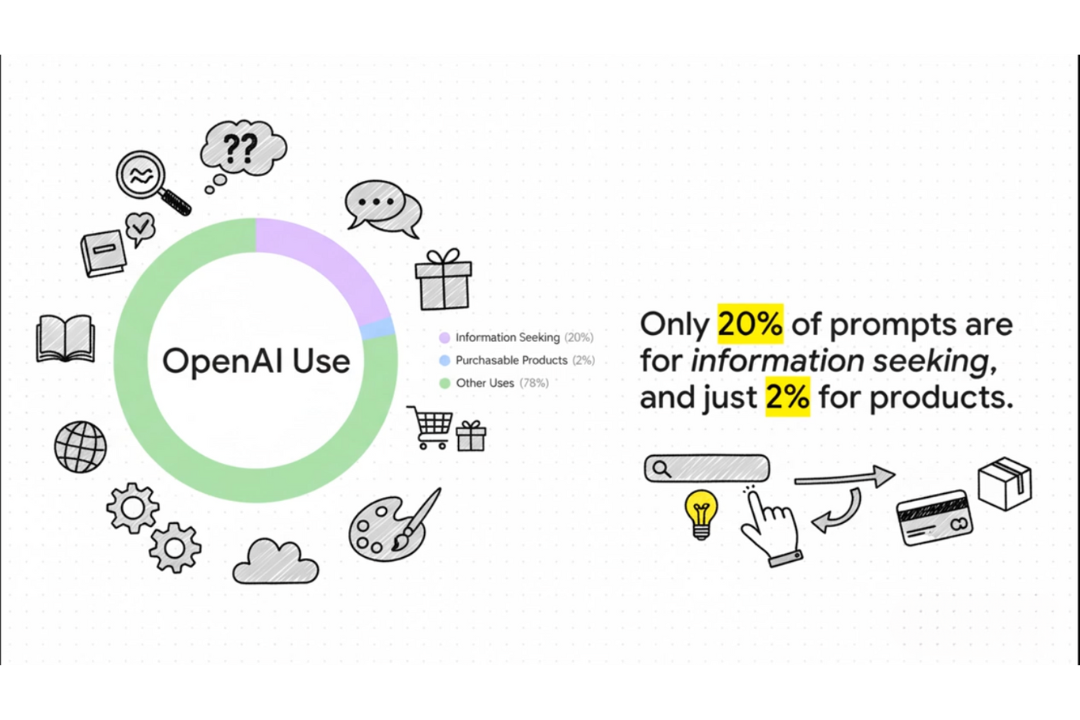
Only 20% of OpenAI prompts re for information seeking, and just 2% for products.

Clicks vs Impression: The Real Disruption

So if the data says AI isn't killing Google's main business, then what is going on? The real disruption isn't about revenue. It's happening just under the surface. It's all about the fundamental connection between what you see on the page and what you actually click on.

Here's the real problem: with AI overviews answering questions right on the search page, the number of times content gets shown (impressions) is going up, but the clicks that actually take you to a website are staying flat or in some cases going down. That is the real threat.
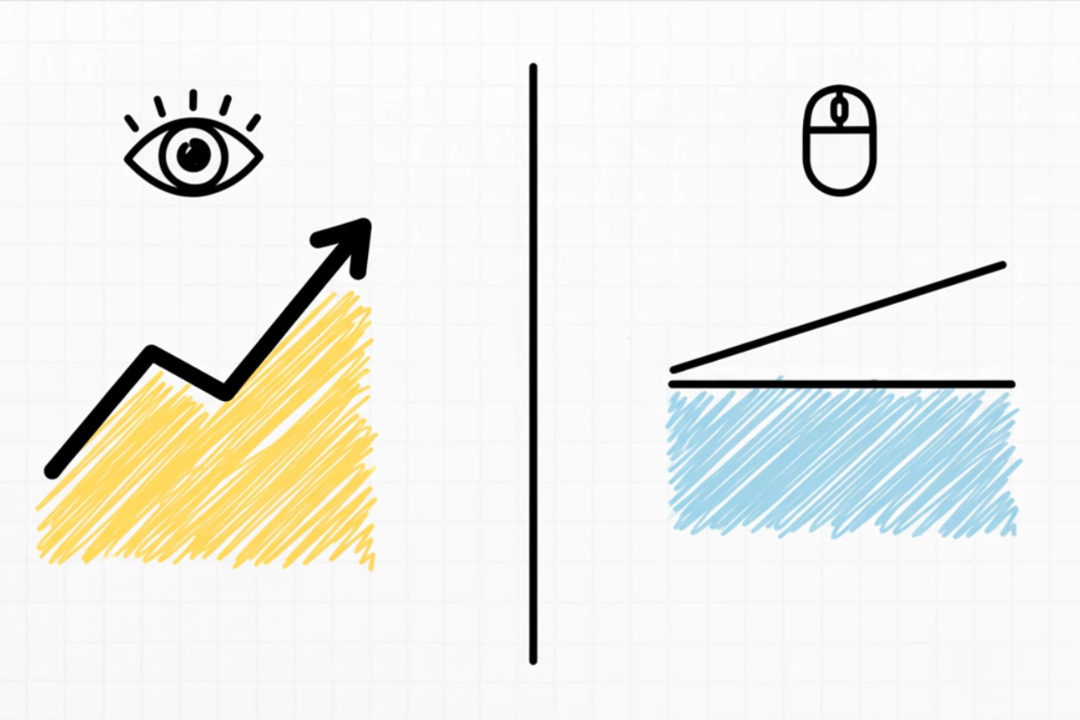
AI overviews drive up search impressions (left)
  while website clicks plateau or decline (right),
 creating a troubling disconnect for content creators.

This whole decoupling of views from clicks is a huge problem for publishers and really anyone who depends on organic traffic.

Google's AI Playbook: A New Advertising Strategy

So how's Google fighting back? They're not just taking this lying down. They are actively rewriting their own advertising playbook for this new AI world. You're going to have to learn a new acronym: AIAX. It stands for the AI Powered Advertising Experience.

The easiest way to think about it is this: Google is taking all the smart keyword-free AI matching from its performance max campaigns, and it's plugging that technology straight into traditional search. This is their big answer to a world where people are asking long conversational questions instead of typing a few keywords.

Here's how this actually works. In the old days, you might target a simple keyword like "blue men's shoe," but with AIX, the AI doesn't just see the words - it understands the concept. It then expands on that idea to match the intent of a much more complicated human question, making sure your ad for blue sneakers shows up.
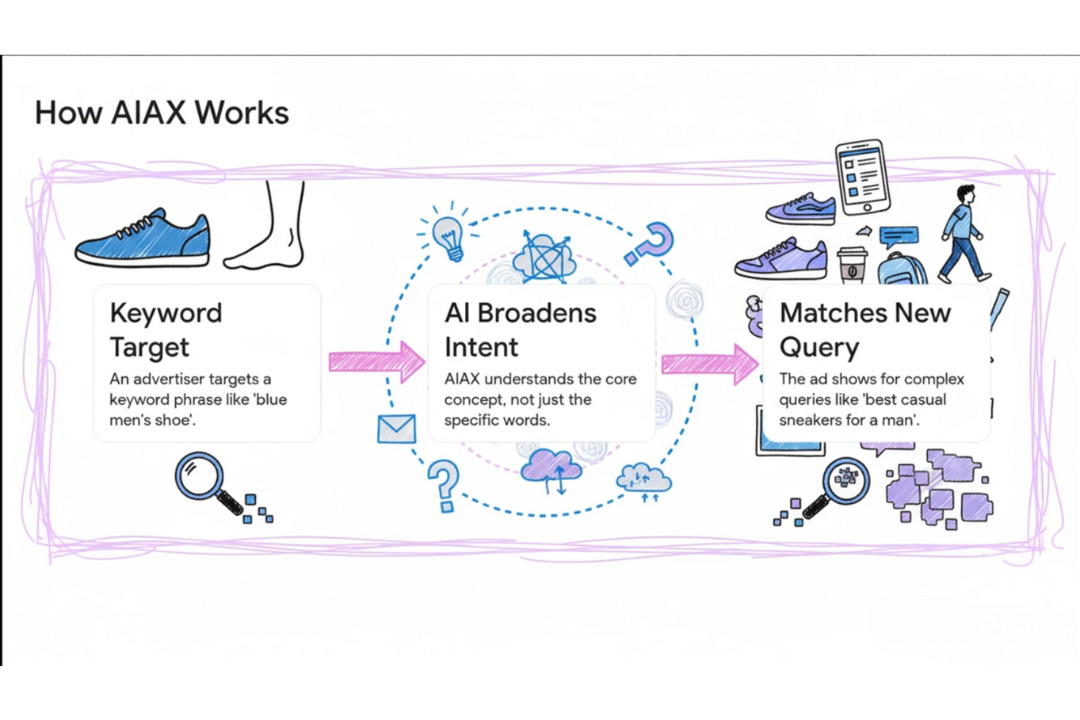
This flowchart shows how AIAX moves beyond
 literal keyword matching to understand searcher intent,
 expanding your ad reach to relevant queries you never
 directly targeted.

What this all boils down to is that the very definition of relevance has changed. It's not just about how well your ad matches a specific keyword anymore. Now it's about how relevant your ad is to the AI-generated answer it's sitting next to. It's a whole new ball game, and all of this leads to a brand new way of thinking for advertisers.

What Advertisers Need to Know Now

Let's break down what you actually need to know to get by in this new landscape.

First: Where is this actually happening right now? Ads that appear inside these AI overviews are live and being tested in the US market. If you're anywhere else, it's not there yet, but you can bet it's on its way.

What does this really mean for your strategy?

  1. Your website and your product feeds are your new keywords. You have to feed the AI good structured data.
  2. To even be eligible to show up here, your campaigns have to use either broad match or this new AIX system. The good news: standard shopping and Performance Max campaigns are already good to go.

Common Questions About the Changes

Can I opt out? The answer very simply is no. As of right now, there's no little switch you can flip to opt out. If your campaigns are eligible, your ads can and probably will show up in these new AI spots.

Can we at least see how these new placements are doing? Again, the answer is not yet. Google isn't breaking out the performance data for ads that run inside AI overviews. For now, all of that data just gets blended in with your regular search performance numbers.
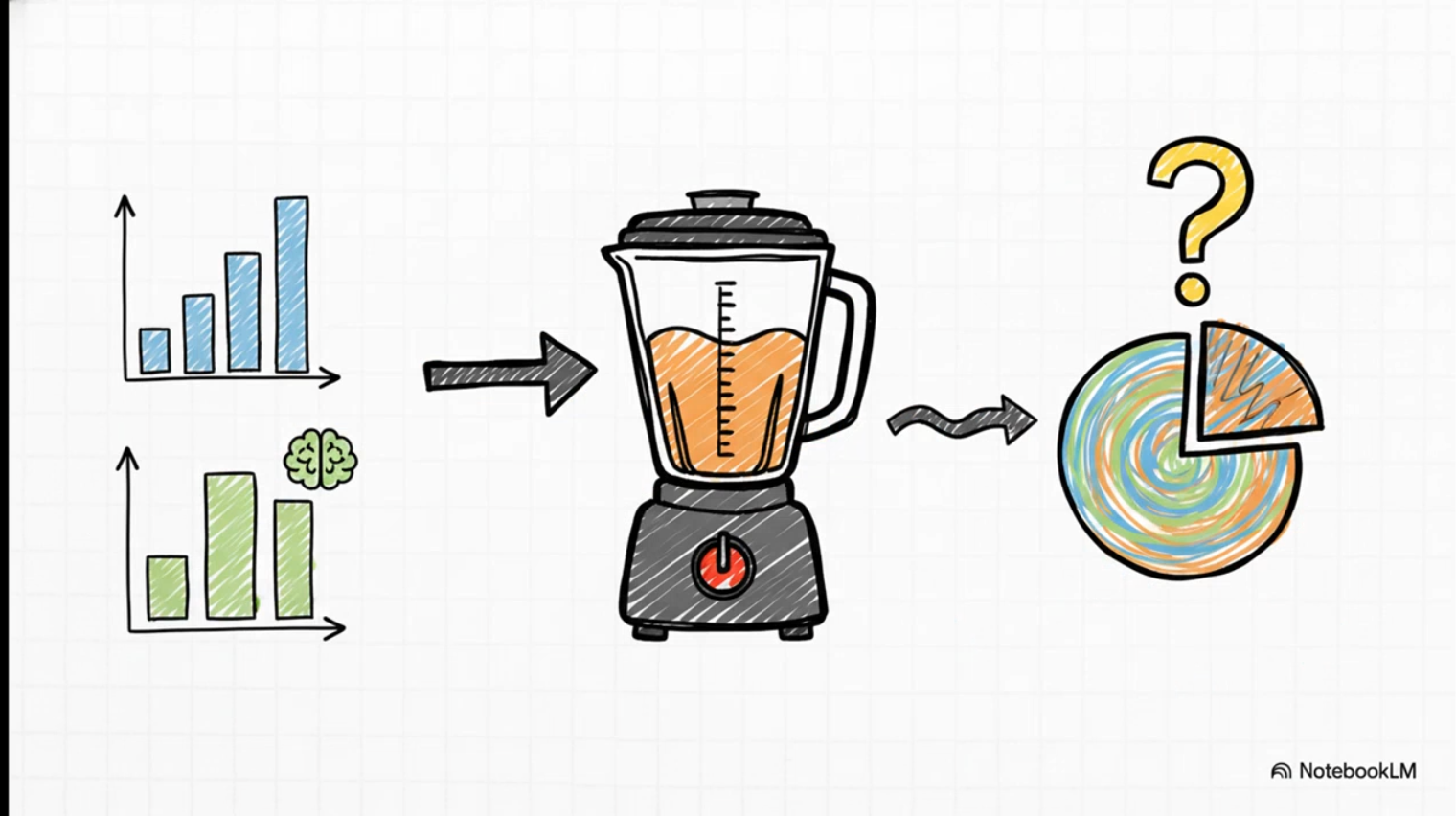
Google mixes AI overview ad data with regular search metrics, creating a reporting black hole where advertisers can’t evaluate the new placements on their own.

The Bottom Line for E-commerce Brands

So where does that leave us?

Google isn’t dying—but the rules are. We’re shifting from precise keyword control to a broader, intent-driven world.

And that brings us to the single most important question for the future: as we lose that old precision of keywords, what becomes the new source of truth for finding and talking to the right customer in this new AI-first world?

If you're running an e-commerce brand and this shift has you worried about your Google Ads performance, here's what I want you to do:

  1. Audit your product feeds and website structure. Make sure your data is clean, detailed, and AI-readable.
  2. If you're still running exact match heavy campaigns, it's time to test broader targeting strategies.
  3. Start monitoring how your Performance Max and Shopping campaigns are performing because those are your best bet for this new AI world.

The future of Google Ads is here. The question is: will your brand be prepared to thrive in it, or will you be left behind? Don't wait to find out.

Go Beyond the Article

Why The Video is Better

  • You'll see real client account examples
  • I can explain things that don’t translate well to text
  • You’ll learn advanced tactics for trickier situations

If you've been anywhere near the tech news, the headlines are pretty dramatic. For the past couple of years, the story has been all about this "code Red Panic" inside Google.

The popular idea is that these powerful new AI tools have landed a knockout blow, and then it's just a matter of time before the whole search Empire crumbles. Here's where things get really interesting. When you stop reading the headlines and start looking at the actual numbers, a completely different picture starts to take shape. Let's do a quick reality check.

The Data-Counter Story

We're going to start with the hard data because it tells a pretty powerful counter story to that whole "Google is cooked" narrative.

First off, let's just follow the money. In the last few quarters, Google's search revenue hasn't just been stable. It's been seeing double digit year over year growth - growing by over 10% when your starting point is more than $50 billion.

That's just massive for a company that's supposedly on the ropes. Financially, they look surprisingly strong. Now take a look at the sheer scale of it all. Google is handling something like 5 trillion searches a year. OpenAI is getting close to 1 trillion, which is insanely impressive, but that still means Google is operating at five times the volume.

This isn't exactly a battle of equals - at least not yet.

Google's self-reported query volume is 5x larger than OpenAI's

Here's the most important data point: It's not just about how many queries, but what kind of queries. Only about 20% of ChatGPT prompts are for information seeking - the classic stuff you'd Google. And when it comes to actually shopping for products, it's a tiny 2%.

It really seems like people are using both tools for different things. It's not an either-or situation.

Only 20% of OpenAI prompts re for information seeking, and just 2% for products.

Clicks vs Impression: The Real Disruption

So if the data says AI isn't killing Google's main business, then what is going on? The real disruption isn't about revenue. It's happening just under the surface. It's all about the fundamental connection between what you see on the page and what you actually click on.

Here's the real problem: with AI overviews answering questions right on the search page, the number of times content gets shown (impressions) is going up, but the clicks that actually take you to a website are staying flat or in some cases going down. That is the real threat.

AI overviews drive up search impressions (left)
  while website clicks plateau or decline (right),
 creating a troubling disconnect for content creators.

This whole decoupling of views from clicks is a huge problem for publishers and really anyone who depends on organic traffic.

Google's AI Playbook: A New Advertising Strategy

So how's Google fighting back? They're not just taking this lying down. They are actively rewriting their own advertising playbook for this new AI world. You're going to have to learn a new acronym: AIAX. It stands for the AI Powered Advertising Experience.

The easiest way to think about it is this: Google is taking all the smart keyword-free AI matching from its performance max campaigns, and it's plugging that technology straight into traditional search. This is their big answer to a world where people are asking long conversational questions instead of typing a few keywords.

Here's how this actually works. In the old days, you might target a simple keyword like "blue men's shoe," but with AIX, the AI doesn't just see the words - it understands the concept. It then expands on that idea to match the intent of a much more complicated human question, making sure your ad for blue sneakers shows up.

This flowchart shows how AIAX moves beyond
 literal keyword matching to understand searcher intent,
 expanding your ad reach to relevant queries you never
 directly targeted.

What this all boils down to is that the very definition of relevance has changed. It's not just about how well your ad matches a specific keyword anymore. Now it's about how relevant your ad is to the AI-generated answer it's sitting next to. It's a whole new ball game, and all of this leads to a brand new way of thinking for advertisers.

What Advertisers Need to Know Now

Let's break down what you actually need to know to get by in this new landscape.

First: Where is this actually happening right now? Ads that appear inside these AI overviews are live and being tested in the US market. If you're anywhere else, it's not there yet, but you can bet it's on its way.

What does this really mean for your strategy?

  1. Your website and your product feeds are your new keywords. You have to feed the AI good structured data.
  2. To even be eligible to show up here, your campaigns have to use either broad match or this new AIX system. The good news: standard shopping and Performance Max campaigns are already good to go.

Common Questions About the Changes

Can I opt out? The answer very simply is no. As of right now, there's no little switch you can flip to opt out. If your campaigns are eligible, your ads can and probably will show up in these new AI spots.

Can we at least see how these new placements are doing? Again, the answer is not yet. Google isn't breaking out the performance data for ads that run inside AI overviews. For now, all of that data just gets blended in with your regular search performance numbers.

Google mixes AI overview ad data with regular search metrics, creating a reporting black hole where advertisers can’t evaluate the new placements on their own.

The Bottom Line for E-commerce Brands

So where does that leave us?

Google isn’t dying—but the rules are. We’re shifting from precise keyword control to a broader, intent-driven world.

And that brings us to the single most important question for the future: as we lose that old precision of keywords, what becomes the new source of truth for finding and talking to the right customer in this new AI-first world?

If you're running an e-commerce brand and this shift has you worried about your Google Ads performance, here's what I want you to do:

  1. Audit your product feeds and website structure. Make sure your data is clean, detailed, and AI-readable.
  2. If you're still running exact match heavy campaigns, it's time to test broader targeting strategies.
  3. Start monitoring how your Performance Max and Shopping campaigns are performing because those are your best bet for this new AI world.

The future of Google Ads is here. The question is: will your brand be prepared to thrive in it, or will you be left behind? Don't wait to find out.

Related Articles

Browse All Articles
© 2025 | Addi Marketing LLC | All Rights Reserved
Terms & Conditions, Priacy Policy.